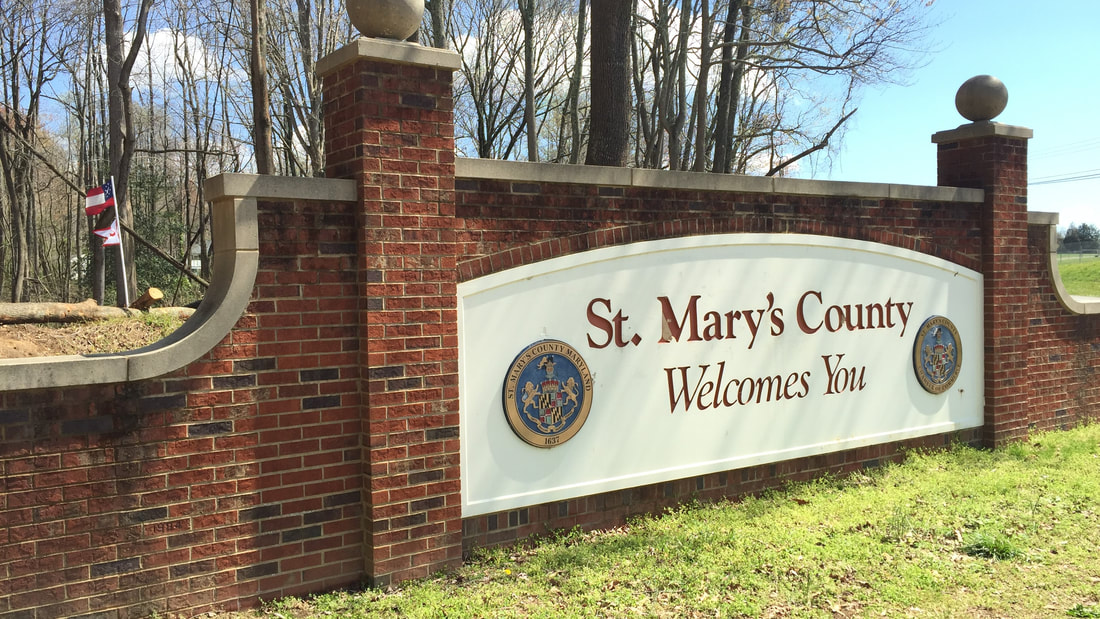
 Originally named Augusta Carolina, St. Mary’s County is seventy miles southeast of Leesburg, Virginia. Just as settlers from above the Mason Dixon have colonized that Southern city and surrounding—and now notorious—Loudon County, they, since the early days of World War II, have been descending on St. Mary’s by the tens of thousands. The newest arrivals and those of Yankee stock born in St. Mary’s never seem to want to leave though they hate it because it is the sticks and because they find that “there’s nothing to do” here. While they have contempt for the locals in general, they have a particularly low regard for those who work in the trades—the pickup-driving, toxically mannish rednecks[1] of The County. Preferring to keep to themselves, these country “throwbacks” live in remote areas such as Scotland and Ridge at the southernmost reaches of St. Mary’s. They can also be found in the “infamous” Seventh Election District farther to the north. A sparsely populated pinewood neck, it is avoided by the carpetbagger element because they have heard the legend that victims of foul play and private justice have been discovered, from time to time, mouldering in the Seventh District swamp. The transplants have also heard that the “crazy” rednecks in The Seventh all have guns. And as the head of his family, the redneck does take seriously the obligation to protect his home. He is often at target practice or in the woods hunting. In his rural domain, however, no one pays any attention to gunfire. The St. Mary’s “inbreds,” as they are known, are easily spotted by the “come-heres” because they drive Ford 150s and 250s or old GMC and Chevy trucks. Showroom perfect or rusting and in need of paint, their pickups are a point of pride. And, unlike feminized hybrid drivers, they under no circumstances would ever own a Chartreuse Prius. And neither would a redneck wear a man bun. Rather than getting his hair styled at a unisex boutique, he gets it cut at places like Tom’s Barber Shop. A “backwoods” patois is another indicator of inbreeding and ignorance to the new people. Ignorant himself of the provenance of the ancient and beautiful dialect of the British Isles that the redneck speaks, the carpetbagger, like the London toff who mocks the speech of the Cornishman, believes that the Celticisms of the country boy in the Borderland South are in need of remediation. But the inbred reckons that it is the transplant’s talk that needs the correcting. As pleasant as the redneck’s speech are his manners. Rednecks reflexively say “Ma’am” and “Sir” and hold doors for others. They pull their trucks off to the side of the road when meeting a funeral procession. Their courtesy is not, however, the affectation of the metrosexual waiter looking for a more generous gratuity at a niche market restaurant. It isn’t something put on when it suits him but a heart-felt politeness, a connaturality. The redneck can be sentimental at times, but he is not treacly. He gives very generous and practical gifts on special occasions: In honor of Mother’s Day, he will take Mama’s car to Big Ed’s for new tires and a high-dollar synthetic oil change. The musical taste of the rednecks runs to Creed Fisher not to Garth Brooks, the latter a favourite of the transplants because he is woke and not too “hillbilly.” These, on the other hand, are the reasons why the rednecks dislike Brooks as much as they do the new NASCAR. Years back they were such fans of this once great Southern pastime that, when Earnhardt’s car hit that fatal wall in 2001, they mourned as if he were kin and attended the memorial service held for him at a local funeral home. But even before The Intimidator’s untimely death at Daytona Beach, the bell had already begun to toll for NASCAR. And twenty years later, many in the St. Mary’s “redneck nation” no longer bother to watch the races on TV or to drive over to the Richmond track. As NASCAR has become more political—banning Battle Flags and absurdly and cravenly making a fuss over garage door pulls—so have many of the formerly disaffected rednecks. A surprising number of them had not bothered with voting until more recently because they believed the ballot box made little difference in their lives (or worse, they had blindly voted Democrat out of a misplaced reverence for a tradition that goes back to the 1860s). Then Obama had shaken their complacency while Trump, in spite of the fact that he is a crude New Yorker, had impressed them with his stance on the defense of the border and his seemingly noninterventionistic inclinations. As a result of Biden’s “victory,” however, for a lot of rednecks, cynicism has returned. For others, who, though they honour their Confederate ancestors and believe that the South was right, had not given present day secessionist movements much thought, dissolution is no longer such a far-fetched notion. They know that their beleaguered county, their occupied state of Maryland are not likely to exit the union, however, so they think about leaving for somewhere more welcoming to their people. But unsure of where to go, many are reluctant to pull up 400 hundred-year-old roots.[2] So they wait and see. For now, they live peacefully among themselves, hunting, fishing and preparing for any eventuality. They throw themselves into their back-breaking work, the jobs from which they come home with dirty faces and mud-caked tee shirts. But they are also getting away more often to go four wheeling in West Virginia and Kentucky. And all spring and summer long, and down into November, they spend a lot of time at a campground across the river in Virginia. Not very far from St. Mary’s as the crow flies, it’s a family retreat where they can relax in the company of fellow rednecks from The County and from places like Mechanicsville just outside Virginia’s ever more unrecognizable capital city. On Saturdays, they put “the pig in the ground [and] the beer on ice,” and have what they call trailer crawls—making the rounds and visiting with these kindred souls from sister states. When not over in the Old Dominion, St. Mary’s rednecks get together at Bob Boy’s, one door up the state road from Tom’s Barber Shop. Rumoured to be collateral kin to a famous Southern general, Bob Boy runs a respectable tavern where coarse language is not permitted. It is St. Mary’s County’s version of the village pub though far humbler than a Garland Ox or a Golden Lion. A plywood paneled redneck social centre, Bob Boy’s is an oasis with “a jukebox and a country song” just a stone’s throw away from the Seventh District swamp.
4 Comments
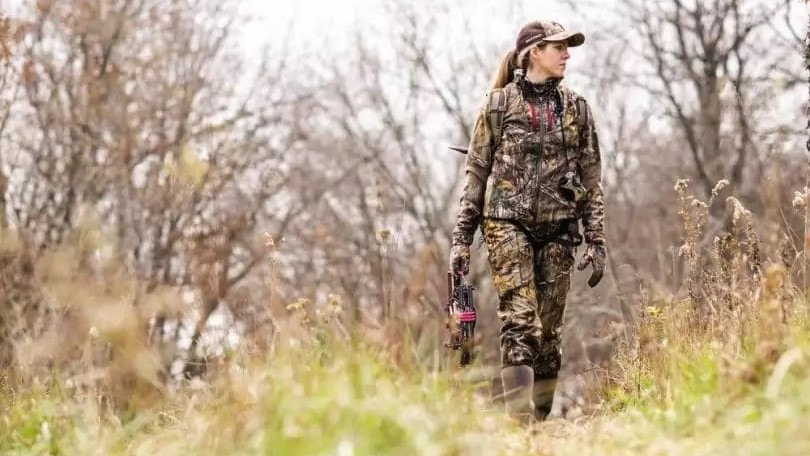 Jenna, McKenzie, and Carly live in the “backwoods.” No hint of vocal fry or urban up-speech in their voices, they say “y’all” not “you guys.” Though fashionable, they are not fans of tattoos, nose piercings or the pink or purple hair of their fellow Gen Zs. All three are pretty and feminine young ladies—and all three are deadly shots. Because of the Covid-19 lockdown, Jenna, Carly’s best friend, is at home “learning” virtually. But this has given her, at least, more time to hunt. Even when she actually attended public school, she would step off the school bus each afternoon, change into her camo and hurry out to her the deer stand on the family farm. She hunts all three seasons—crossbow, black powder, shotgun—and usually gets her legal limit, though, as Jenna explains it, she bides her time waiting for the bigger game like the eight-point buck she shot recently. She not only hunts but can help with field dressing her kills. And she has an excellent recipe for venison jerky. McKenzie is a new bride, an outfielder on a local women’s softball team and a recent college graduate—she worked her way through school. With her husband, she crabs and fishes in the local estuaries keeping the freezer stocked. A petite blond with delicate features, she like Jenna, is equally skilled with the crossbow, muzzleloader and shotgun. And she is also a patient hunter looking for the right deer to come along. And he did. McKenzie’s best trophy had been a seven-point buck. No rag horn, it was something she was proud of. But what made her a local legend and set a county record was the one she got a year later. That day started out on a sour note. Discouraged because she hadn’t seen anything other than some does, she resigned herself to taking one of them and succeeded in doing so. Then a huge buck—a monster in the words of one hunting association—stepped into view a hundred yards away and McKenzie fired. It had rack with a twenty-six-inch spread and thirteen points—actually fourteen but what appeared to have been the largest point had been broken off probably in combat with another buck. It was the kill of a lifetime and prissy little McKenzie was the centre of attention, having earned the respect of many an old hunter. Like McKenzie, Carly is also a new graduate—from high school in this case. Unlike McKenzie, hunting is something she has only recently taken up in earnest. Up to now, she has proven her marksmanship mainly on the shooting range over at a neighboring farm, her prey just some metal coyote cutouts. That all changed on a late fall Saturday, when the lawns were still green, the leaves just beginning to cover them. In the morning, Carly put on her hunting gear (which included camo Crocks) and headed for the woods. She took up her spot in the ground blind and, ignoring all the noise that the squirrels, for such small creatures, always seem to make, listened hard for the snap of a twig. Her sharp young eyes fringed with false lashes, Carly watched and held a beautifully manicured finger on the trigger of a CenterPoint. When she heard that unmistakable snap, her hunting companion calling out a sound that makes a deer freeze, she got the kill—a young buck. It wasn’t Sissy’s legendary monster, but it was her first deer and it was a perfect shot—the arrow went straight through its heart. Fortunately, Carly didn’t have to track down a wounded and suffering animal deep into the swamp. She knew right away that she had a clean kill because the buck tucked his tail down. When a deer’s tail is up it means he is likely going to run. In Carly’s circle of friends, that first deer is a special event. She, McKenzie and Jenna are country girls whose sweethearts are country boys. There are Battle Flag decals and mud splatters on their four wheelers; there are mostly country songs on their digital playlists. Keeping to their remote corner of the county as much as they can, they are unimpressed with places like New York City, preferring their own rural world. They understand that their culture and way of life are under attack and that in the present day there are those who do not wish to leave them in peace. Intuitively Constitutional originalists with a basic grasp of history, they also know, avid hunters though they might be, that the Second Amendment is not about hunting. 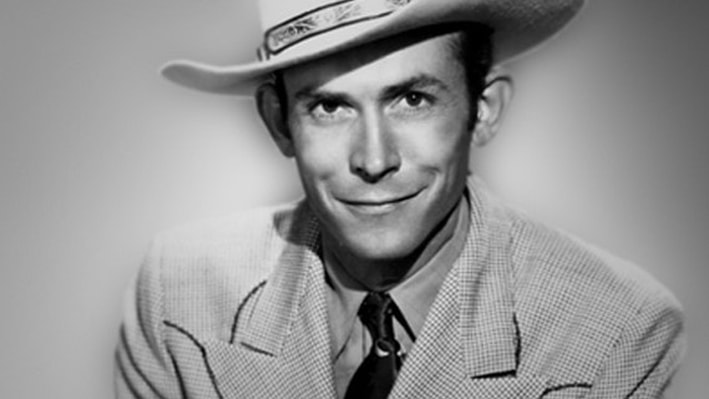 Not generally a fan of post-1990s country, I have to acknowledge that not all the more contemporary songs are bad and not all the old ones are good---in fact some classic country is maudlin and uninspired, and some of the more recent chart toppers are excellent even if not very country in many cases. The other problem with the newer country is that it is often politically correct and, worse, in the words of the Confederate Railroad song, “a little on the trashy side.” Because there was a renaissance of sorts in the 1980s and 90s in country music, songs of this period have a nostalgic sound. I have included a few of them in the following list of what I consider the twenty best country songs of all time. The list is not based on Billboard ratings but purely on my own preferences. The songs are in no particular order. Hello Walls, 1965, Faron Young. This one should be near the top of any list of the all-time greatest country songs. It tells the story of a man who has been abandoned by his “darlin’.” There is an ingeniously controlled quiver in Faron Young’s voice as he sings, “We must all stick together, or else I’ll lose my mind. It looks like she’ll be gone a long, long time.” It is obvious that he has already slipped the bonds of sanity as he is addressing, poor soul, the walls, the window and the ceiling. Bubba Shot the Jukebox, 1992, Mark Chestnutt. This hilarious hit single pokes fun at social worker psychobabble. Chestnutt is also an extraordinary singer of “sad old country songs.” If We Make It Through December, 1973, Merle Haggard. Haggard knew what it was like to be poor, to have a hard candy Christmas. New country singers couldn’t duplicate the pain in his voice. A Place to Fall Apart, 1984, Merle Haggard with Janie Fricke. The harmony, soft instrumentation and the Spanish guitar style bridge in this song make it a country masterpiece. It’s a good one to listen to if you are feeling sorry for yourself. Mind Your Own Business, 1949, Hank Williams. A song that is very relevant today. Hey, Good Lookin’, 1951, Hank Williams. One of the songs I remember listening to in the fifties on a Bakelite radio in my mother’s kitchen, this is Hank at his best. Stand by Your Man, 1968, Tammy Wynette. Tammy was a feminist’s worst nightmare. Miller’s Cave, 1960, Hank Snow. Born in Nova Scotia, Snow was known as the Singing Ranger. His is a distinctive voice, nasal but deep and pleasant at the same time. You can clearly hear, however, the murderous rage in that pleasant voice as he sings about killing a woman who had unfaithful, “low down ways.” Wanted: One Good Hearted Woman, 1990, Alan Jackson. This touching song is about forgiveness. Alan Jackson has one of the finest voices in country, a voice also made for singing gospel hymns. The South’s Gonna Do It Again, 1974, Charlie Daniels. While most people, it seems, think “The Devil Went Down to Georgia” is Charlie Daniel’s greatest hit—and it is first rate—I consider this one his best. The fiddling and the piano playing are incomparable and so are the lyrics—“Elvin Bishop sitting on a bale of hay; he ain’t good looking but he sure can play.” Jackson, 1967, Johnny Cash and June Carter Cash. “Yeah, go to Jackson, you big-talking man, and I’ll be waiting there in Jackson behind my Japan fan.” My favorite Johnny Cash song. I’m a Honky Tonk Girl, 1960, Loretta Lynn. The earliest hit for Loretta—she was 28 at the time—Honky Tonk Girl calls to mind Kitty Wells’ “It Wasn’t God Who Made Honky Tonk Angels.” Amarillo by Morning, 1982, George Strait. “I ain’t got a dime but what I got is mine. I ain’t rich but Lord I’m free.” George Strait with few exceptions during his career remained true to the tradition of Music Row. Coat of Many Colours, 1971, Dolly Parton. This beautiful tune was recorded when Dolly was still country, in the days before her “Islands in the Stream” and “Nine to Five” phase. Pop culture’s gain was country’s loss. My mother recalled how Dolly, pre-superstardom, and Porter Wagner used to appear at the fairgrounds in our county. They would do their show from a flatbed trailer and would sign autographs and chat with the fans after the show. Mama got to meet them. I’d Be Better Off in a Pine Box, 1990, Doug Stone. One of the genre’s under-rated singers, Stone has a voice perfectly suited for singing old style country songs. This one’s theme is similar to that of “Miller’s Cave.” Hello Darlin’, 1971, Conway Twitty. This soulful love song is a far cry from Twitty’s later hits which were, unfortunately, in my opinion, a little coarse. You’re the Reason God Made Oklahoma, 1980, Shelley West and David Frizzell. This duet is about a country girl who goes to Los Angeles but realizes it may be time to go back home. In many country songs, LA represents the cold, heartless city which proves to be no place for people rooted in the soil as Southerners are. Frizzell and West, with their old school harmonizing, personify real country music. ‘Til a Tear Becomes a Rose, 1990, Keith Whitely with Lorrie Morgan. Whitley, who tragically died of alcoholism at 33, was part of that revival of the classic sound in the 1980s and 90s. His voice was vintage country. Pass Me by if You’re Only Passing Through, 1980, Janie Fricke. This song tells the story of a good-looking stranger who has the air of “the traveling kind,” and a girl who is determined not to be a “stepping stone among the other hearts that [he has] walked on.” The libertine and the trusting young girl is also a popular theme in country songs. I Sang Dixie, 1988, Dwight Yoakam. No one but Yoakam could have done justice to this song. His is the perfect hillbilly voice. “Dixie” is about a man from the South who dies homeless on a “damned old LA street.” To really appreciate this song search YouTube for Yoakam’s live performance of it accompanied by Buck Owens on the guitar. If it makes you cry, then you are still true to your Southern heritage. “I sang Dixie as he died; people just walked on by as I cried; the bottle had robbed him of all his Rebel pride; so I sang Dixie as he died.” |
